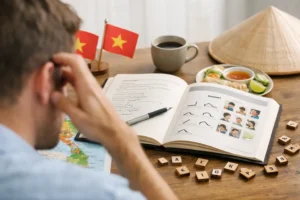
A lot of adults become interested in the vietnamese language for a simple reason – they want to use it in real life. That might mean speaking with family, preparing for travel, joining conversations with Vietnamese friends or colleagues, or finally studying a language they have wanted to learn for years. The challenge is that Vietnamese can look unfamiliar at first, especially if you have only studied European languages before. The good news is that unfamiliar does not mean impossible.
What makes the early stage easier is understanding what kind of language Vietnamese is, where learners usually struggle, and what kind of teaching actually helps. For busy adults in Singapore, that matters more than theory. If your goal is to speak clearly, understand everyday conversation, and make steady progress, the right approach can save months of frustration.
Why the Vietnamese language feels different
The vietnamese language often surprises first-time learners because it combines a Romanized writing system with pronunciation patterns that are very different from English. Many people assume the alphabet will make reading easy. In one sense, it does. You can learn to recognize words quickly because the script is familiar. But pronunciation carries much more weight than many beginners expect.
Vietnamese is a tonal language, which means pitch changes can affect meaning. A syllable spoken with one tone can mean something completely different when spoken with another. This is one reason self-study can become frustrating. Learners may memorize vocabulary but still struggle to be understood when speaking.
At the same time, Vietnamese grammar can feel refreshingly direct. There are no verb conjugations like in French or Spanish, and nouns do not change form the way they do in some other languages. That trade-off is worth understanding. Grammar may be simpler in some areas, but pronunciation and listening usually require more careful attention.
What adult learners usually find hardest
Most adults do not struggle because they are incapable of learning Vietnamese. They struggle because they are learning in the wrong order.
One common problem is focusing too much on isolated vocabulary. If you only memorize word lists, you may recognize terms on paper but freeze in conversation. Another issue is learning pronunciation without enough live correction. Vietnamese sounds can be subtle, and small differences matter. Without feedback from an experienced instructor, it is easy to repeat the same mistakes until they become habits.
Listening is another hurdle. Spoken Vietnamese moves quickly, and connected speech can sound very different from slow textbook audio. Beginners often think, “I knew that word, so why didn’t I catch it?” Usually the problem is not memory. It is lack of exposure to natural rhythm, tone, and sentence flow.
This is why many adults who want to learn Vietnamese do better in structured lessons than in purely app-based study. Apps can help with repetition, but they rarely provide enough speaking correction, guided practice, or cultural context.
How to learn vietnamese more effectively
If your goal is practical communication, it helps to build skills in layers. First, get comfortable with core pronunciation. This stage may feel slow, but it pays off later. Learners who skip it often need to relearn basic sounds after months of practice.
Next, focus on high-frequency sentence patterns instead of single words. Real conversation depends on phrases you can use immediately, such as introducing yourself, asking simple questions, talking about daily routines, and responding naturally. This is especially useful in a vietnamese speaking course or conversational vietnamese course where speaking confidence is the main priority.
After that, listening and speaking should grow together. If a course emphasizes only reading and writing, progress may feel academic rather than practical. Adults usually benefit most from guided dialogue, role-play, repetition with correction, and regular speaking tasks that match real situations.
It also helps to choose a pace you can sustain. Some learners want intensive training. Others need a weekly schedule that fits work and family commitments. Neither approach is better by default. The best option is the one you can continue consistently.
Choosing the right vietnamese language course
Not every vietnamese language course is built for the same kind of learner. Some courses move quickly and assume you are comfortable experimenting with pronunciation. Others are more supportive and structured, which suits complete beginners better.
If you are comparing options, look beyond broad claims. A strong program should explain who the course is for, how lessons are delivered, what speaking practice is included, and whether instructors can give clear explanations in English when needed. That matters because adult learners often want to understand not just what to say, but why Vietnamese works the way it does.
For many people, flexibility is also a deciding factor. An online vietnamese course can work well for professionals with changing schedules or long commutes. It removes travel time and can make it easier to study consistently. On the other hand, some learners speak more confidently in a physical classroom where they can interact face to face and stay fully focused.
There is no universal winner between in-person and online formats. It depends on your schedule, learning style, and how much accountability you need. What matters most is lesson quality, instructor feedback, and a course structure that keeps you actively using the language.
Vietnamese lessons for beginners need more than basics
A lot of vietnamese lessons for beginners promise fast results. That can be appealing, but speed should not come at the expense of foundations. Beginners need a course that builds confidence carefully.
A good beginner program should make pronunciation manageable, not intimidating. It should introduce useful vocabulary in context and help learners form complete, simple sentences early on. It should also normalize mistakes. Adults are often harder on themselves than younger learners, especially when speaking aloud. Supportive instruction makes a real difference here.
This is one reason a vietnamese course for adults often works better than general language content designed for mixed audiences. Adult learners usually want clear goals, practical outcomes, and teaching that respects their time. They do not want to spend weeks on language they are unlikely to use.
Learn Vietnamese online or in person?
Many prospective students ask whether it is better to learn vietnamese online or attend physical classes. The honest answer is that both can be effective when taught well.
Online lessons are ideal for convenience and consistency. If your work schedule changes often, or if you prefer studying from home, a vietnamese tutor online or a live online class can make progress more realistic. The key is interaction. Recorded content alone is rarely enough for speaking development.
In-person lessons can be especially useful if you want a stronger classroom routine and immediate face-to-face engagement. Some learners also find pronunciation correction easier to absorb in a physical setting. If location matters, attending lessons in a central area such as Tanjong Pagar can make classes easier to fit into the workweek.
For many adults, the best setup is simply the one they will keep showing up for. A perfect course on paper is less helpful than a practical one you can attend regularly.
What to expect from a strong conversational Vietnamese course
If your main goal is communication, a conversational vietnamese course should do more than teach set phrases. It should help you respond, ask follow-up questions, and stay in the conversation even when you do not know every word.
That means lessons should include guided speaking, listening practice with natural pacing, correction that is specific rather than vague, and useful situations drawn from everyday adult life. It should also be paced realistically. Some learners want immediate speaking confidence, but confidence grows from repeated success, not from being rushed.
A well-designed course also recognizes that learners progress differently. Some people speak boldly and need help refining accuracy. Others understand more than they can say and need encouragement to participate. Personalized instruction helps both types of learners improve faster.
This is where specialist schools often stand out. A provider focused specifically on Vietnamese, with experienced instructors and flexible class formats, can usually offer a more targeted learning experience than a generic language platform. For adults comparing a vietnamese language course, that specialization often matters.
The vietnamese language rewards consistency
The vietnamese language is not a language you memorize once and keep forever without practice. It responds well to steady exposure. Short, regular study sessions usually work better than occasional bursts of effort. A few focused lessons each week, combined with listening and speaking practice, can produce stronger results than a more ambitious plan that quickly becomes unrealistic.
This is especially true for adults balancing work, family, and other commitments. Progress does not have to be dramatic to be meaningful. Being able to greet someone naturally, understand familiar questions, or hold a simple conversation is already real progress. From there, fluency grows through repetition, guidance, and continued use.
If Vietnamese has been on your list for a while, the smartest first step is not finding the fastest shortcut. It is choosing a learning path that gives you structure, feedback, and enough confidence to keep going.